For motorhomes, campers, travel trailers and fifth-wheels
Denver RV odor removal starts at the source
Foam cushions, thin carpet and fabric walls soak up smoke, mildew and mouse smell, and a closed-up winter in a storage lot concentrates all of it. Find where the smell lives and what needs fixing before anyone treats the interior.
This website is a draft preview. No phone line or request form is connected yet.
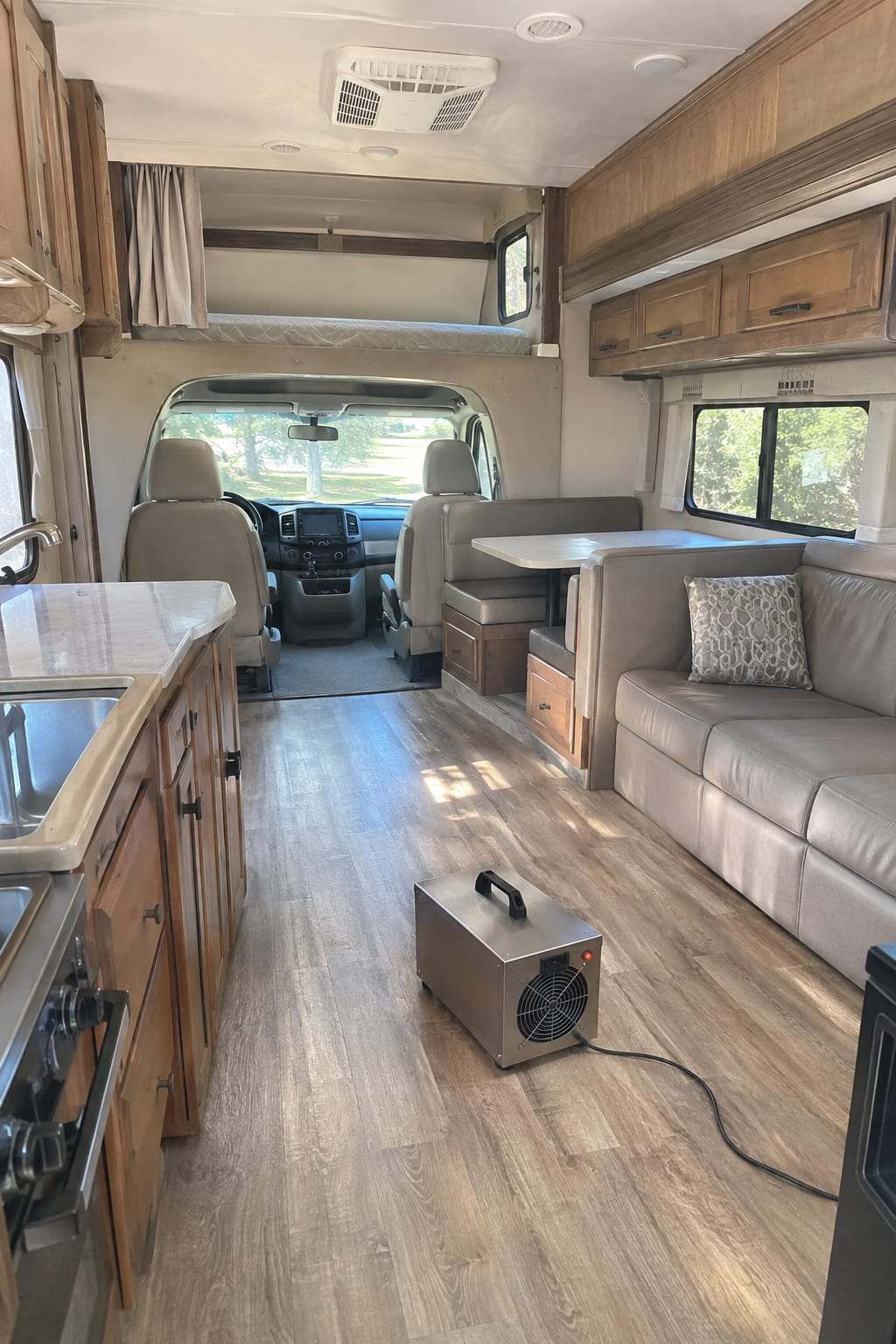
Source first, air secondA Denver-area guide for RV owners. Trace the source first: tanks, rodents or moisture.
Why an RV holds a smell longer than a house
An RV packs a living room's worth of foam, carpet and fabric into a box the size of a bedroom. Cabinets and closets get almost no airflow, and the roof air conditioner and furnace pull cabin air through the same ducts over and over. Park it for a season and the odor has nowhere to go.
Good work starts by finding where the smell is concentrated, then treats fabrics, hard surfaces and air pathways, with a controlled whole-interior treatment only when the job calls for one. Mildew tied to an active leak comes back until someone repairs the leak.
-
Dinette and sofa cushions
Thick foam soaks up spills, smoke and humidity, and the covers hide it.
-
Bunks and mattresses
Body moisture builds up in a small sleeping space, worst of all in the cab-over.
-
Carpet and wall panels
Thin carpet sits on a plywood floor, and fabric-covered walls hold smoke.
-
Roof vents and air conditioner
The AC recirculates whatever is in the cabin. Leaks around vents let water in.
-
Storage bays and under-sink
Slow plumbing drips, forgotten food and the odd mouse nest.
-
Holding tanks and plumbing
Mechanical problems. An RV service shop fixes these before any odor work.
Five smells, five different first moves
Half of these are not odor jobs at the start. Read the tag on each one before you book anybody.
- Odor treatment
Smoke
Cigarette or cigar smoke left by a previous owner, held in foam, headliners and AC ducts.
- Leak repair first
Mildew
Mildew from roof, window or slide-out leaks, or from storage with no ventilation.
- Cleanup and sealing first
Mice
Mice that nested or died in cabinets, walls or the underbelly over the winter.
- RV technician first
Tank smell
Holding-tank smell, which almost always means a plumbing, seal or vent problem.
- Cleaning, then treatment
Food and galley
Food and cooking odor soaked into galley cabinets and the dinette.
The spring open-up
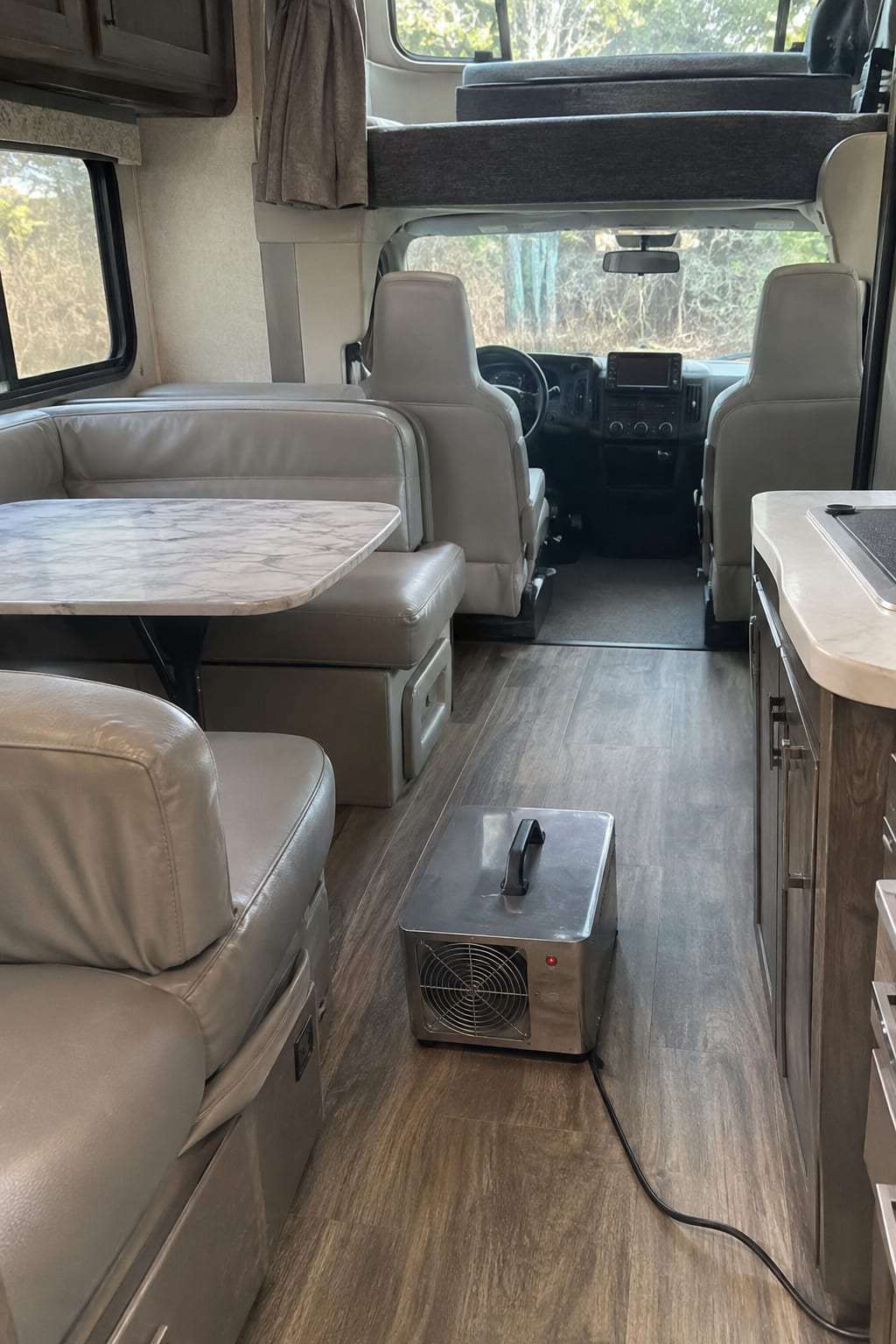
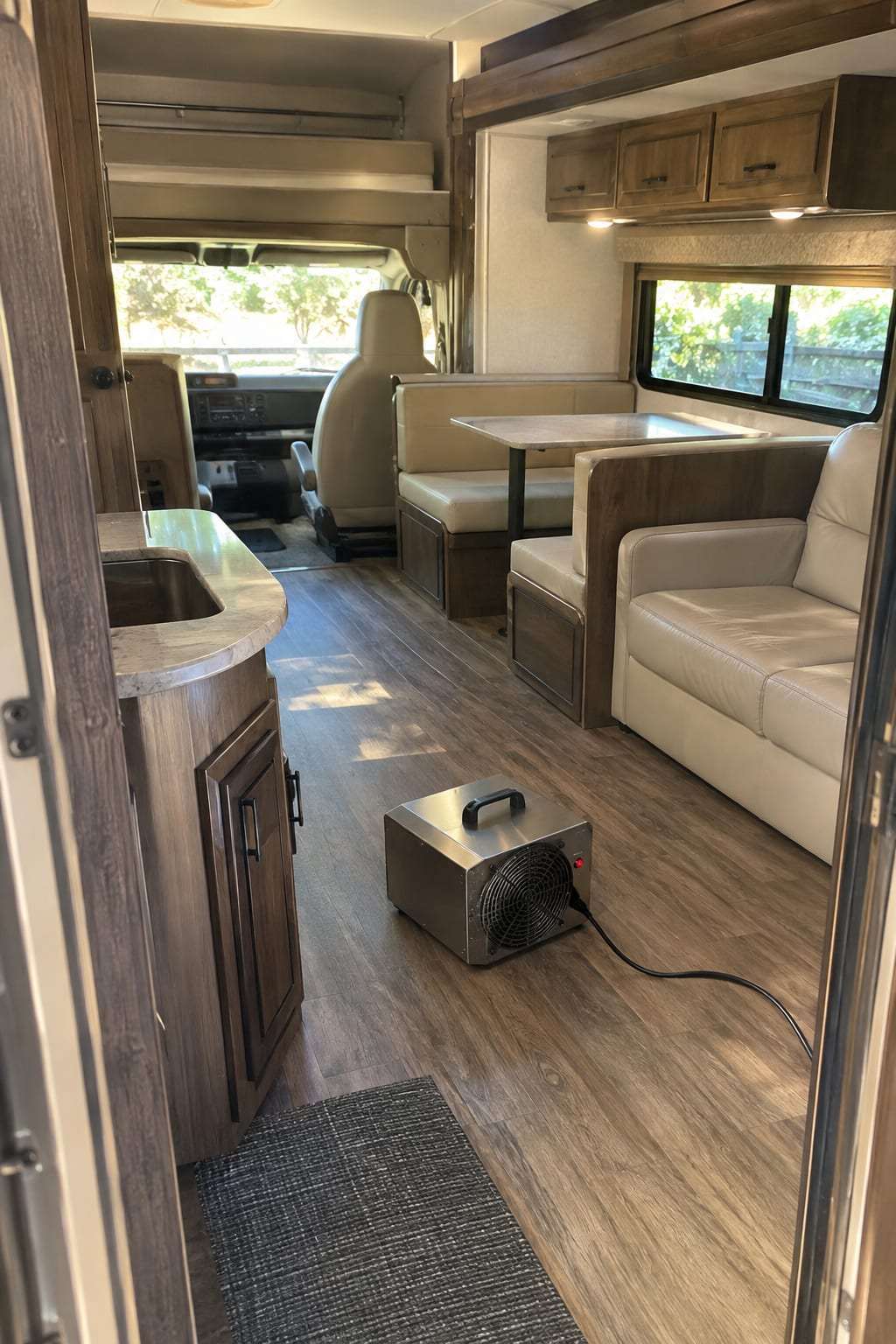
A rig closed up for a Colorado winter can open in April smelling musty or worse. The usual causes are condensation inside the sealed cabin, a roof or window leak nobody noticed, mice that moved in, and food left in a cabinet. Check for water stains around vents and windows and droppings in the bays before you book treatment, so the right problem gets fixed first.
Before anyone treats it
- Look for active leaks around the roof, windows and slide-outs, and have them repaired.
- Send holding-tank and vent problems to an RV technician first.
- Pull out bedding, curtains, personal items and anything washable.
- Swap the air conditioner and furnace filters if you can reach them.
How RV odor treatment usually runs
Five stops, in this order. Skip the first two and the smell tends to come back.
-
Find the source
Check cushions, carpet, cabinets, bunks, bays and the air system, and note where the smell is strongest.
-
Sort the materials
Decide what can be treated and what is cheaper or safer to replace, like a soaked mattress.
-
Agree on a written plan
Get the scope, the products and anything that could limit results in writing before work starts.
-
Treat
Treat each source, then run a controlled whole-interior treatment if the job needs one, followed by full ventilation.
-
Walk through it
Check the result together and set up storage habits that keep odor from building again.
Storage season on the Front Range
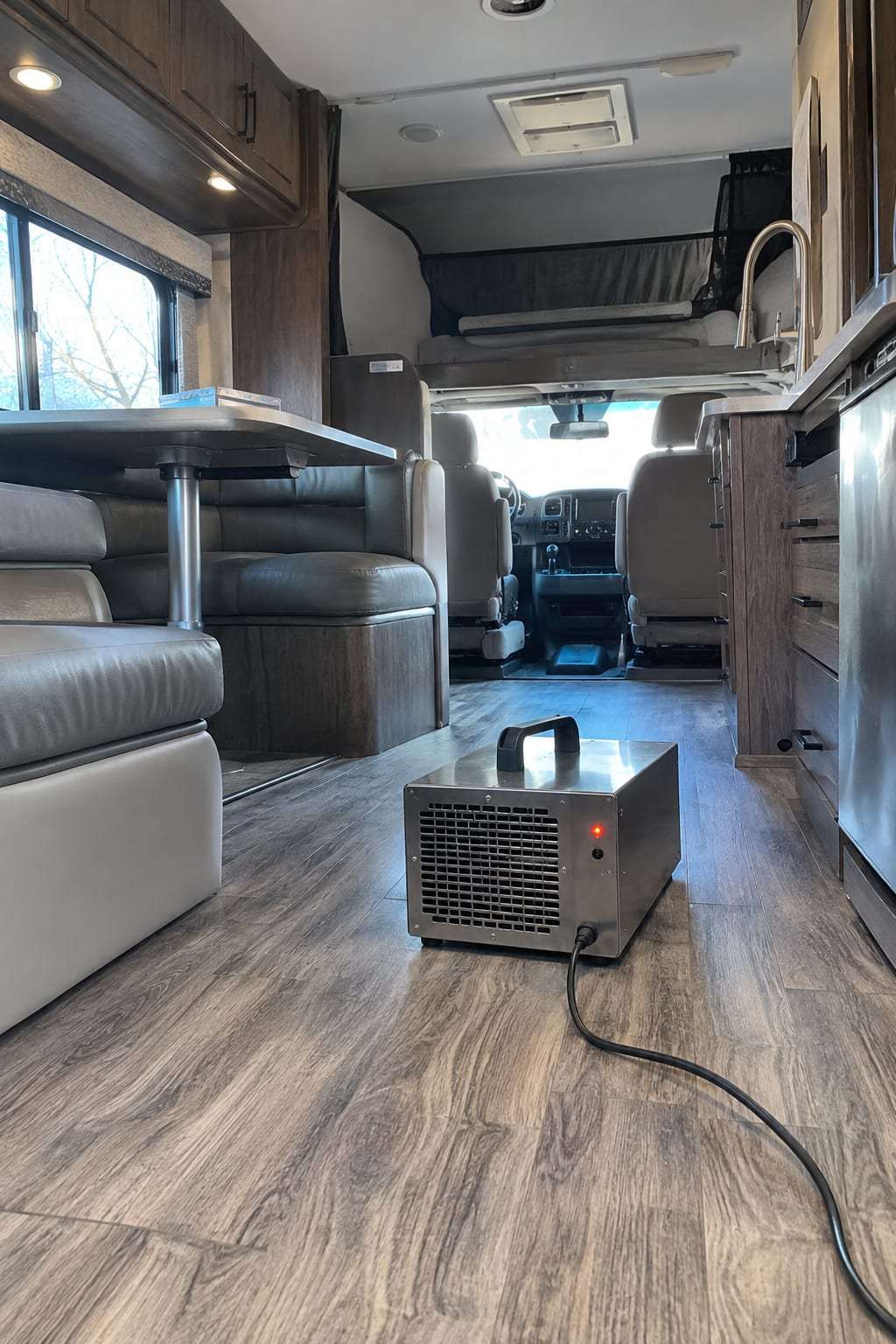
Mountain campgrounds and national parks sit a few hours from Denver, so plenty of metro households own a rig. Most of those rigs spend months in storage lots between trips, often through snow, and that closed-up stretch is when mildew and stale odor build.
Some odor providers also handle boats and other vehicles. When you ask for a quote, ask where the work can happen and how scheduling works.
- This guide covers the Denver metro. Farther out, ask a provider whether they travel to you.
- Venting and dehumidifying a stored rig keeps mildew from getting a start.
- Get leaks repaired by an RV technician before any odor treatment.
- Boats and other vehicles can often be treated too. Ask the provider.
ZIP codes served: 80203 (Denver), 80218 (Denver), 80202 (Denver), 80205 (Denver), 80206 (Denver), 80204 (Denver), 80209 (Denver), 80211 (Denver), 80223 (Denver), 80216 (Denver), 80220 (Denver), 80246 (Denver), 80207 (Denver), 80212 (Denver), 80219 (Denver), 80214 (Denver), 80210 (Denver), 80230 (Denver), 80224 (Denver), 80221 (Denver), 80222 (Denver), 80266 (Denver), 80226 (Denver), 80238 (Denver), 80247 (Denver), 80010 (Aurora), 80232 (Denver), 80110 (Englewood), 80113 (Englewood), 80236 (Denver), 80033 (Wheat Ridge), 80030 (Westminster), 80231 (Denver), 80215 (Denver), 80003 (Arvada), 80002 (Arvada), 80045 (Aurora), 80227 (Denver), 80229 (Denver), 80237 (Denver), 80012 (Aurora), 80235 (Denver), 80239 (Denver), 80260 (Denver), 80004 (Arvada), 80014 (Aurora), 80123 (Littleton), 80249 (Denver).
Also nearby: 80121, 80031, 80120, 80111, 80011, 80228, 80005, 80122, 80233, 80017, 80419, 80640, 80234, 80021, 80015, 80013, 80112, 80241, 80128, 80129, 80401, 80022, 80126, 80020, 80007, 80453, 80465, 80130, 80124, 80454, 80018, 80019, 80602, 80023, 80016, 80127, 80457, 80125, 80601, 80131, 80403, 80026, 80134, 80137, 80108, 80516.
Read further
Guides, checklists and local notes for storage season, smoke and mildew in rigs.
Guides18
- Black tank smell inside the coach: finding the leak path
- Sour gray water and sink drain smells in a camper
- Why turning on the roof fan can make the RV smell like the tank
Fix the leak, empty the cabinets, then get it in writing
Repair leaks and tank problems first, pull out everything washable, and ask any provider you check for a written quote before work starts.
Draft preview. “Denver RV Odor Removal” is a working name for this website, not a registered or verified business. It is not affiliated with any other company. No calls, messages or form requests are accepted until the operator, service coverage and contact details are verified.
Describe your RV odor
This form is not connected. This website is a draft preview: no business has been confirmed to receive requests, so the fields below are switched off and nothing can be sent. In an emergency, call 911.
Frequently Asked Questions
Can smoke odor be removed from an RV?
In most cases. Smoke residue gets treated in fabrics, hard surfaces and the air system, and a controlled whole-interior treatment may follow. Cushions soaked through with smoke are often better replaced.
Why does my camper smell musty every spring?
A closed-up rig traps humidity, and small leaks let water in. Fix the leaks, vent or dehumidify during storage, then treat the odor that is already there.
Will treatment fix a holding-tank smell?
Not if a plumbing, seal or vent problem is causing it. An RV technician repairs that first, and any odor left in fabrics can be treated afterward.
Does the RV need to be empty during treatment?
Take out personal items. People and pets stay out during a controlled whole-interior treatment until ventilation is complete.
Can a boat be treated the same way?
Often, yes. Boats have the same foam, fabric and closed-up storage. Ask whether a provider works on boats and on your type of vessel.
Is ozone used on RV upholstery and rubber seals?
Ask before you book. Ozone can be hard on rubber, vinyl and some fabrics, and fragrance sprays only cover a smell. Ask whether either one is part of the plan.
The RV smells like sewage. Is that an odor treatment job?
Not at first. A sewage smell inside an RV usually comes from the holding-tank system: a dry trap, a failed seal, a blocked roof vent or a sensor problem. Have an RV service technician check that first. Once the mechanical problem is fixed, any odor left in fabrics and surfaces can be treated.